
Saltar al contenido

imagen · 23 de octubre de 2026

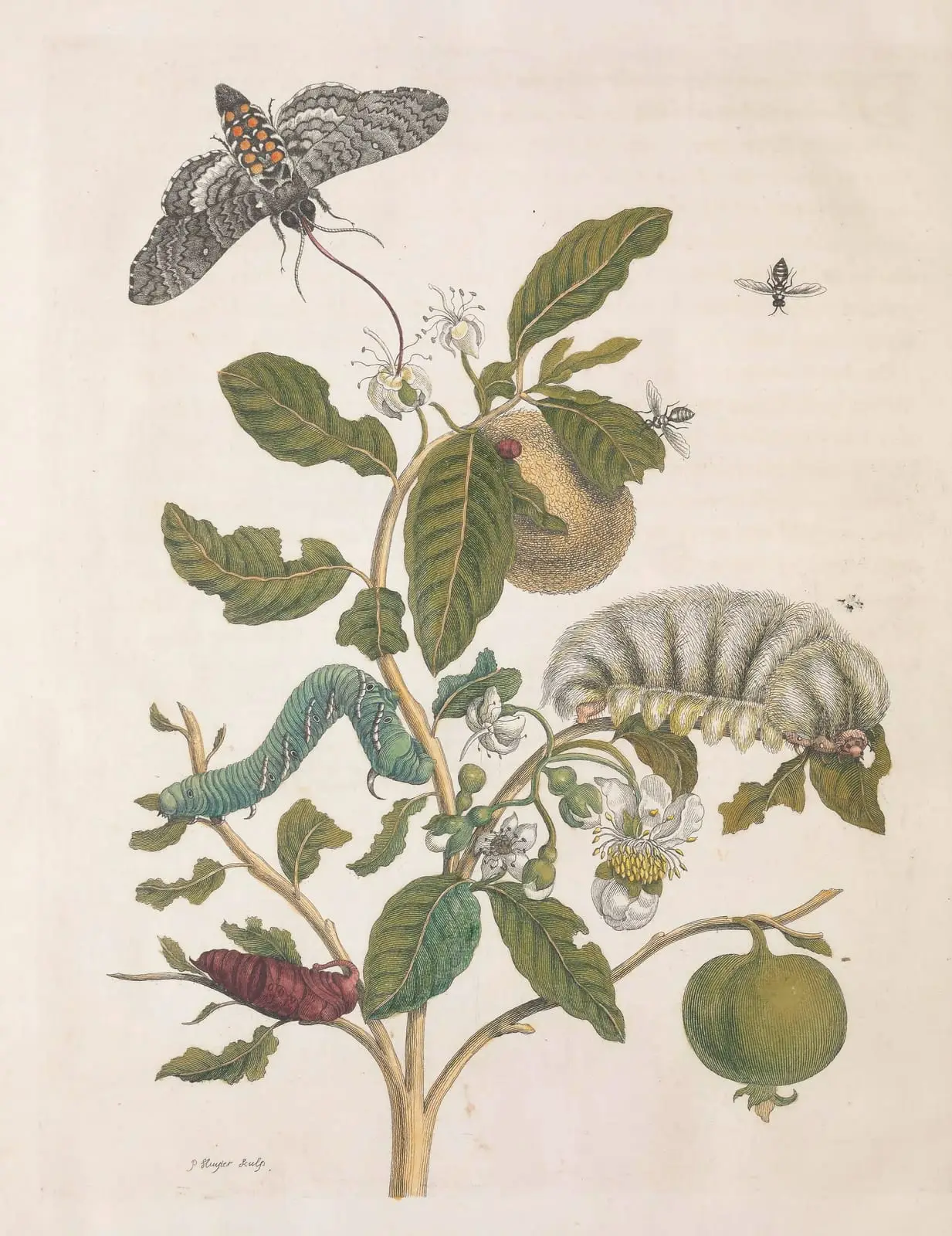
Maria Sibylla Merian — Metamorphosis Insectorum Surinamensium

De Maria Sibylla Merian

Fotografía: Maria Sibylla Merian, Metamorphosis Insectorum Surinamensium, 1705

imagenpublico

Maria Sibylla Merian — Metamorphosis Insectorum Surinamensium

Merian, Maria Sibylla. Metamorphosis Insectorum Surinamensium. 1705.

Biodiversity Heritage Library / Smithsonian Libraries and Archives.

  • Detail of Maria Sibylla Merian's illustration of Arsenura armida, moths of the Saturniidae family, and Erythrina fusca, a species of flowering tree. The larvae are from a separate species.
  • Engraving from Maria Sibylla Merian's pioneering Metamorphosis insectorum Surinamensium (Insects of Suriname), first published in 1705. Merian had travelled to Dutch Surinam in 1699 to study and record the tropical insects, a trip she self-funded, an unsual practice at the time, especially for a woman.
  • Engraving from Maria Sibylla Merian's pioneering Metamorphosis insectorum Surinamensium (Insects of Suriname), first published in 1705. Merian had travelled to Dutch Surinam in 1699 to study and record the tropical insects, a trip she self-funded, an unsual practice at the time, especially for a woman.
  • Engraving from Maria Sibylla Merian's pioneering Metamorphosis insectorum Surinamensium (Insects of Suriname), first published in 1705. Merian had travelled to Dutch Surinam in 1699 to study and record the tropical insects, a trip she self-funded, an unsual practice at the time, especially for a woman.
  • Hand-coloured etching from Maria Sibylla Merian's seminal Metamorphasibus Insectorum Surinamensium, the product of two years of research — from 1699 to 1701 — in the then-Dutch colony of Surinam. It was first published in 1705 in Amsterdam, with a number of subsequent editions issued over the next decades.

1 / 47